
Explore our full course catalogue
Each of our courses was designed to match the specific expertise of our trainers, but also to fit with the Erasmus programme priorities and requirements. Detailed information for each course below provides learning outcomes that you can use for preparing your Europass Mobility document. If you need more additional information, please do not hesitate to contact us.
Every classroom can be seen as a mixed ability classroom, and every teacher and education professional must be familiar with the challenges this presents. Our Mixed ability course has been developed to help professionals meet those challenges, and offers practical tips and insights, as well as solutions to common problems.
Learning outcomes
- show more confidence in working with mixed ability classrooms
- use different classroom management techniques
- differentiate tasks and scaffold learning successfully
- use practical ideas for games and activities in their own professional contexts
- Dyslexia in the learning environment – what is it and how can we help?
- ADHD
- Multisensory instruction
- Principles of scaffolding
- Games in the mixed ability classroom
- Classroom management
- Developing cognitive strategies
- Using engaging activities to promote positive attitudes
- Individual learning styles
- Assessment and self-assessment
- Multiple intelligences
- Differentiation – adapting teaching materials
- ICT for differentiation
Each participant will receive a valid course certificate indicating the number of hours and covered topics, to comply with the Erasmus reporting requirements and regulations.
This course aims to encourage participants to embrace new methods and techniques of teaching as well as to apply ICT tools in order to motivate students, stimulate their creativity, maximize student engagement and help students succeed.
Early exposure to technology, Internet-based learning and communication, apps and social media – all of these have changed our learners, which is why it is important to address the issue of motivation.
Learning outcomes
- improve their teaching skills and become better storytellers
- learn how to use Internet tools
- fully engage all students in the classroom
- help students reach their full potential
- Storytelling techniques
- Game-based learning
- Social media in the classroom
- Internet learning platforms
- Mnemonic strategies
- The importance of feedback
- Maximizing student engagement
- Intrinsic and extrinsic motivation
Each participant will receive a valid course certificate indicating the number of hours and covered topics, to comply with the Erasmus reporting requirements and regulations.
Our ICT in education course has been developed for teachers and other professionals working in education who understand that ICT is a key tool for a modern school. The aim of the course is to offer practical ideas and solutions for including a variety of ICT tools in the classroom.
Learning outcomes
- try out new methods and ideas
- show more self-confidence in using ICT in the classroom
- analyse and assess the value of existing tools and resources
- adapt ideas into their own professional contexts

- ICT for task-based learning
- Tools for classroom management
- Mobile devices in the classroom
- Social media in education
- Professional development online
- Using video in the classroom
- ICT for assessment
- Presenting and sharing information using ICT
- Using online resources efficiently
- Student motivation and engagement using games and quizzes
Each participant will receive a valid course certificate indicating the number of hours and covered topics, to comply with the Erasmus reporting requirements and regulations.
This course has been created for teachers who want to learn more about building a student-centered classroom. It focuses on strengthening teacher-student relationships and creating a positive classroom atmosphere that supports cooperation, engagement, and learners’ curiosity.
Learning outcomes
- encourage and motivate students to participate during class
- understand the importance of cooperation and support in a safe environment
- use storytelling, game-based learning and task-based activities to promote positive attitudes
- exchange experiences
- effectively apply and adapt ideas from the course to classrooms in their own professional contexts
- The importance of giving effective feedback
- Understanding the importance of motivation
- Extrinsic and intrinsic motivation
- Building rapport and dealing with difficult behaviour
- ICT and flipped classroom
- Task-based learning
- Story-telling techniques and activities
- Game-based learning
- Managing mixed ability classroom
- Using engaging activities to promote positive attitudes
Each participant will receive a valid course certificate indicating the number of hours and covered topics, to comply with the Erasmus reporting requirements and regulations.
Our Classroom management course has been created for teachers and other educational workers who want to establish and maintain excellent working relationships with their students in an organised, safe and engaging learning environment.
Learning outcomes
- have a broader understanding of establishing classroom rules
- understand general pedagogical principles behind giving instructions, classroom groupings, error correction etc
- use new ideas for assessment
- boost motivation and change students’ and teachers’ roles in a modern classroom
- exchange experiences and learn how to effectively apply and adapt ideas from the course to classrooms in their own professional contexts
- Innovative classroom management methods
- Motivation and student-centered learning
- ICT and flipped classroom
- Managing mixed ability classrooms
- Dealing with difficult behaviour
- Measuring students’ progress
- Giving effective feedback
Each participant will receive a valid course certificate indicating the number of hours and covered topics, to comply with the Erasmus reporting requirements and regulations.
English is the most commonly spoken language in the world and the language of science, diplomacy, business, tourism and the Internet. Not only does knowledge of the English language improve your communication, but it also helps you understand other cultures and expands your brain power and activity.
We offer courses aimed at teachers and other school staff who wish to improve their English language skills.
Learning outcomes
- improved their speaking and writing skills
- expanded their vocabulary
- refreshed their knowledge of grammatical structures
- developed communication skills
- expanded their professional network
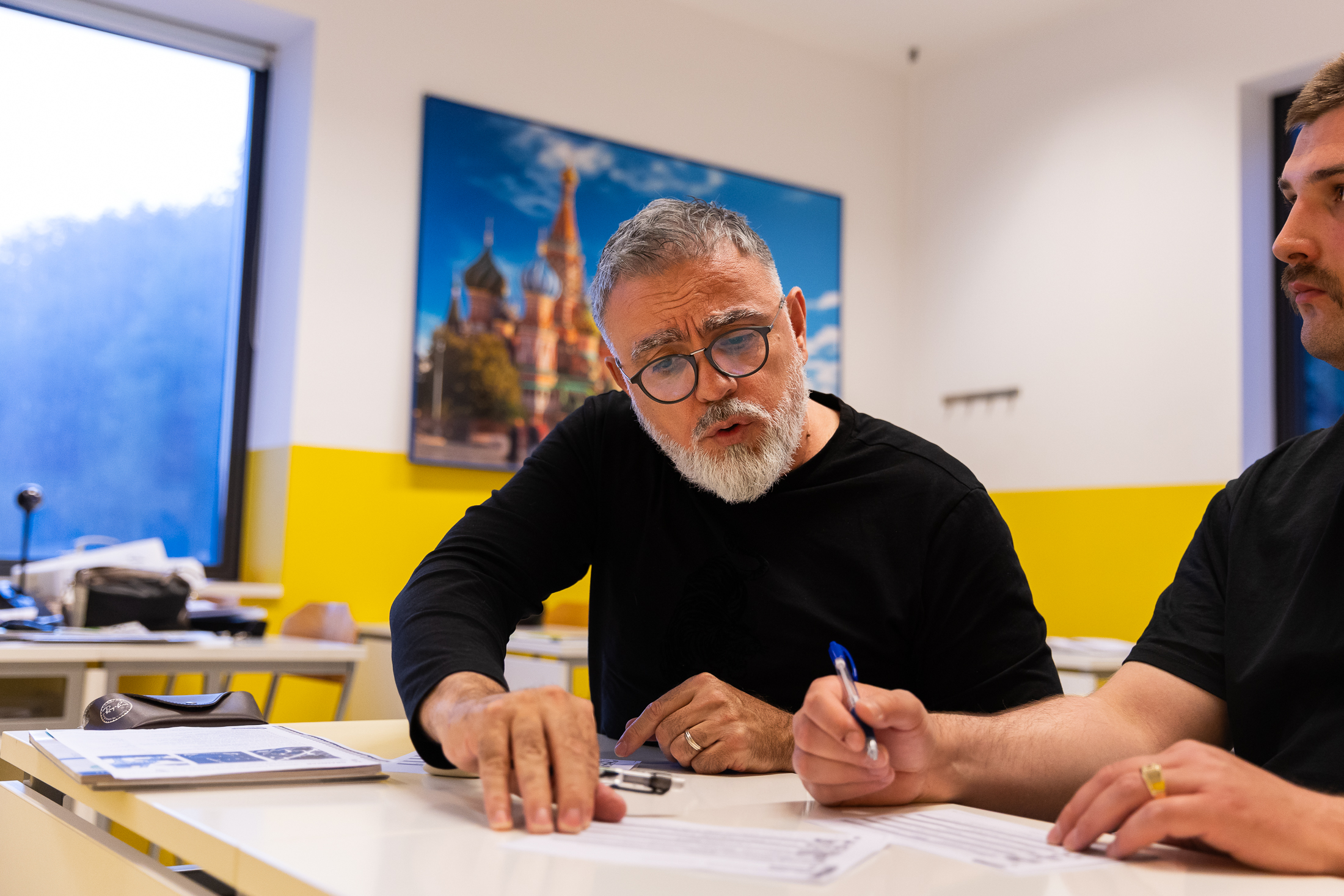
The basic course is intended for “false” beginners and those who feel that their knowledge of English needs some refreshing. The emphasis is on the development of basic vocabulary, grammar and communication strategies with the aim of improving all four language skills – speaking, writing, listening and reading.
- Speaking: dialogues, round table discussions, debates, role-play, film/book reviews, presentations (powerpoint, photo descriptions etc)
- Writing seen as a process approach: register, style, content organisation, target reader
- Looking at language: idioms, colloquial English, phrasal verbs, tenses, lexis in context
- Listening: for understanding, for detail, for context
Each participant will receive a valid course certificate indicating the number of hours and covered topics, to comply with the Erasmus reporting requirements and regulations.
This course is designed for teachers and other school staff who wish to fine tune their English language skills. The course is held at the B2/C1 level according to the Common European Framework of Reference and is therefore intended for teachers who already have a high level of English competence. The tutors are native speakers with extensive experience in teaching English as a foreign language.
Learning outcomes
- improved their speaking and writing skills
- expanded their vocabulary
- refreshed their knowledge of grammatical structures
- developed communication skills
- expanded their professional network
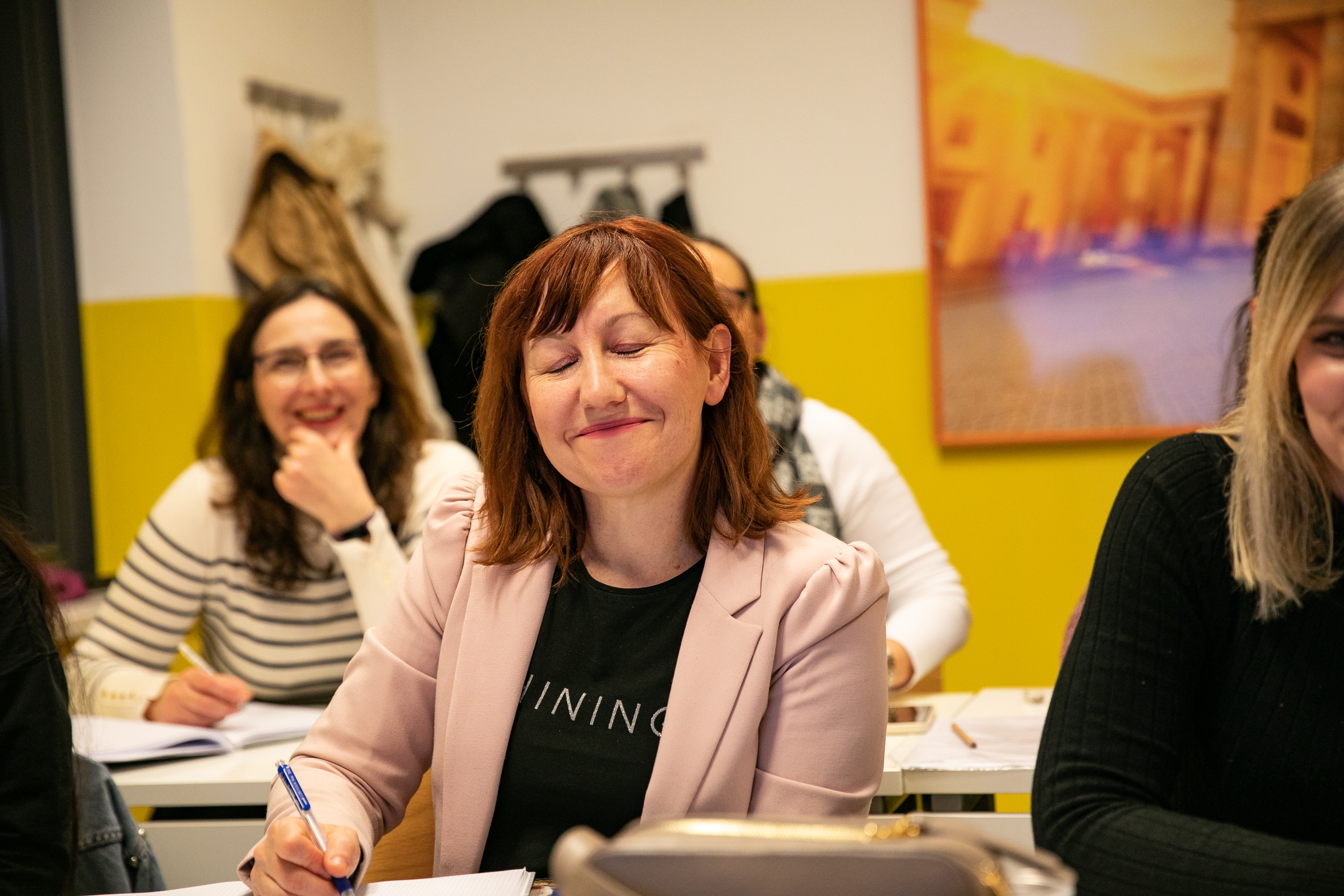
The advanced course is for those who want to expand their knowledge and focus strongly on the development of their communication skills in English. The course is based on authentic, fun and interesting materials with a strong focus on productive skills – speaking and writing.
- Listening: for understanding, for detail, for context
- Speaking: dialogues, round table discussions, debates, role-play, film/book reviews, presentations (powerpoint, photo descriptions etc)
- Writing seen as a process approach: register, style, content organisation, target reader
- Looking at language: idioms, colloquial English, phrasal verbs, tenses, lexis in context
Each participant will receive a valid course certificate indicating the number of hours and covered topics, to comply with the Erasmus reporting requirements and regulations.
The primary target group for this course are project management personnel working in educational institutions which participate in European projects with emphasis on Erasmus KA1 and KA2. Participants will be introduced to a range of web-based software solutions which will help them plan, execute and monitor project activities.
Learning outcomes
- use Beneficiary module for managing KA1 and KA2 projects
- use Key Action Plus app to plan and manage project activities
- use Jira app to manage tasks of individual team members
- choose the most appropriate communication tool for their project (Trello, Telegram, Discord)

- Proper use of European Commission IT tools
- Best IT tools available on the market for managing KA2 projects
- Tools for project communication
- Task management of project members and teams
- Dissemination, impact assessment and quality management tools
Each participant will receive a valid course certificate indicating the number of hours and covered topics, to comply with the Erasmus reporting requirements and regulations.
Learning outcomes
- understand key environmental concepts
- foster the development of green skills among students
- guide students in understanding the causes and consequences of environmental issues
- gain practical knowledge of sustainable living practices
- develop effective communication skills to articulate principles of sustainability
- encourage students to take responsibility for environmental protection
- develop critical thinking skills
- become familiar with relevant EU documents and sustainability policies

This is a comprehensive teacher training program aimed at equipping educators with the knowledge and skills to integrate sustainability into their teaching practices and for school managers to integrate it into school practices. Throughout the course, participants will gain a profound understanding of key environmental concepts, acquire practical knowledge of sustainable living practices, and develop effective communication skills to convey the principles of sustainability.
Focused on fostering critical thinking, the program empowers educators to guide students in comprehending the causes and consequences of environmental issues and encourages the development of green skills among students.
Each participant will receive a valid course certificate indicating the number of hours and covered topics, to comply with the Erasmus reporting requirements and regulations.
This course equips language teachers with the pedagogical, technical, and methodological skills needed to meaningfully integrate Virtual Reality (VR) into language teaching. Participants explore how immersive virtual environments can support communicative language learning.
Learning outcomes
- Understand the pedagogical value of VR for language learning
- Use and adapt virtual learning environments for different levels and teaching contexts
- Design VR-based language tasks
- Integrate VR activities into existing curricula and lesson plans
- Facilitate collaborative and problem-solving tasks in virtual environments
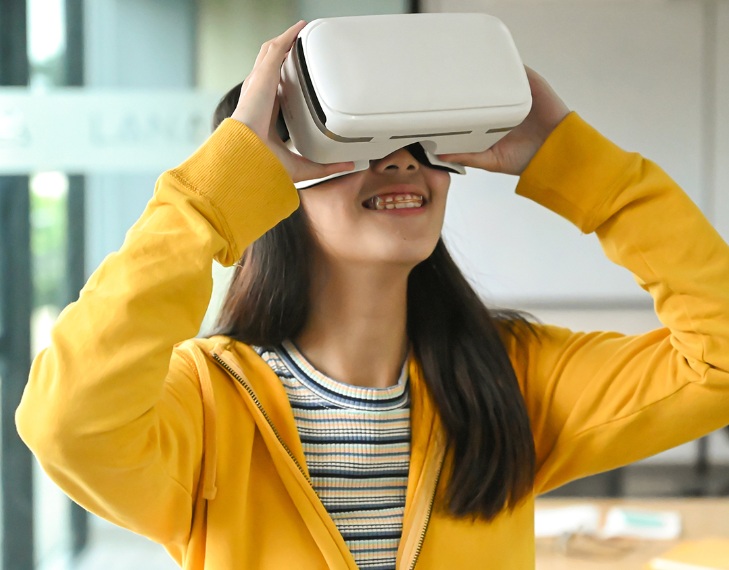
Through hands-on practice, reflection, and lesson design, teachers learn how to select, adapt, and create VR-based activities aligned with CEFR and curricular goals.
- Foundations of VR in language teaching
- Task-based learning in VR
- Experiential and immersive learning
- TPR and movement-based learning in VR
- Communicative language practice in virtual environments
- Collaboration and problem-solving in VR
- Role-play and simulation for real-life language use
- Storytelling in VR
- Lesson planning with VR (pre-, in- and post-VR tasks)
Each participant will receive a valid course certificate indicating the number of hours and covered topics, to comply with the Erasmus reporting requirements and regulations.
This course has been created for teachers who want to learn how to foster discussion, collaboration and independent learning in their classroom. It focuses on developing critical thinking skills while promoting process-centered learning.
Learning outcomes
- spark students' curiosity by motivating them to ask relevant questions
- help students develop metacognitive skills
- teach them the value of slow, methodical thinking
- shift the focus from product evaluation to the learning process
- promote empathy, reasoning, respect and responsibility
- effectively apply and adapt ideas from the course to classrooms in their own professional contexts
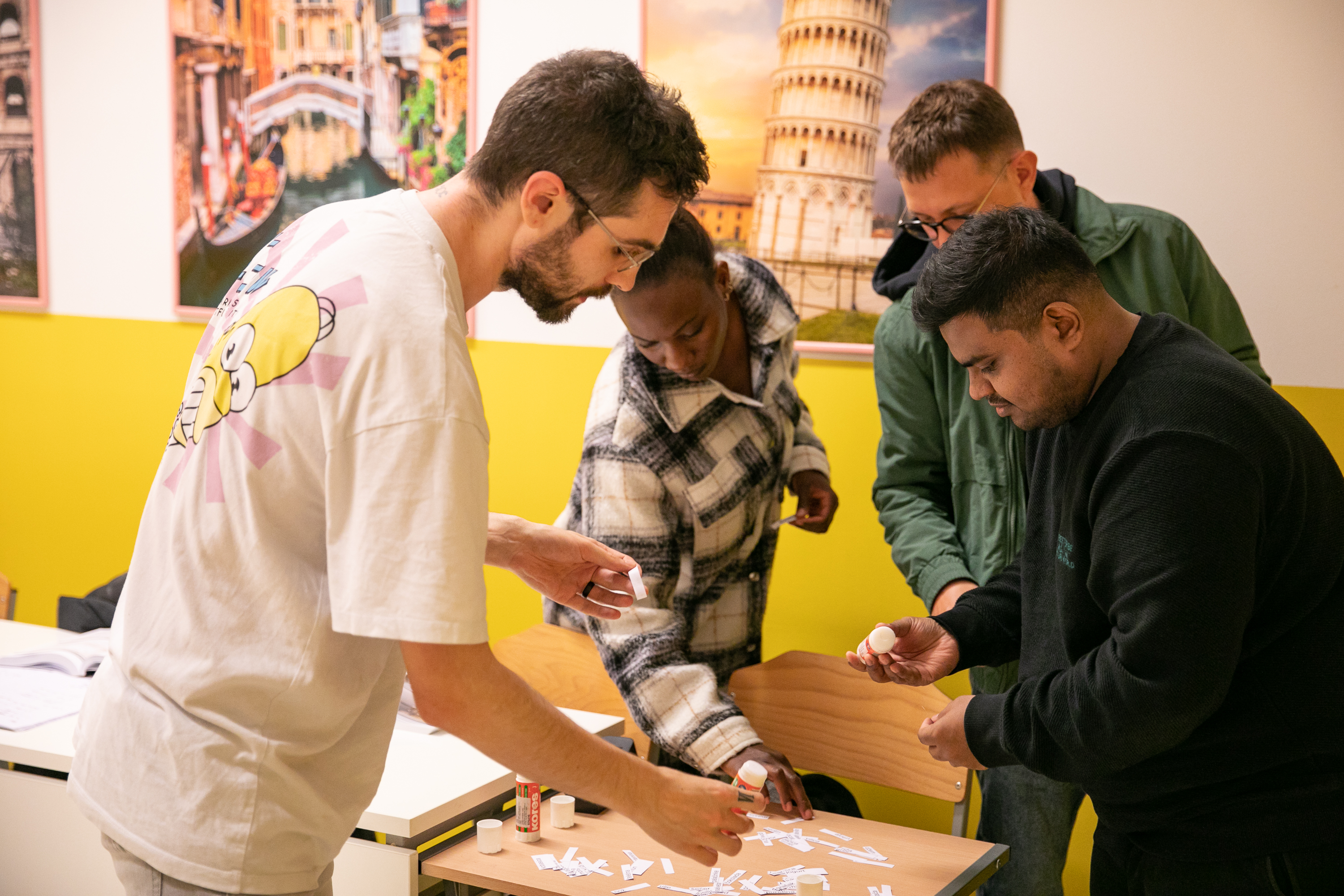
- Developing critical thinking skills in different types of tasks
- The importance of metacognition
- Motivation and creativity in student-centered learning environment
- Promoting meaningful discussions (Socratic Method, fishbowl discussions, thinking routines)
- Media literacy
- Game-based learning and "brain breaks"
- Fast and slow thinking
- Assigning roles in groupwork discussions and projects
Each participant will receive a valid course certificate indicating the number of hours and covered topics, to comply with the Erasmus reporting requirements and regulations.