

Your week in Split
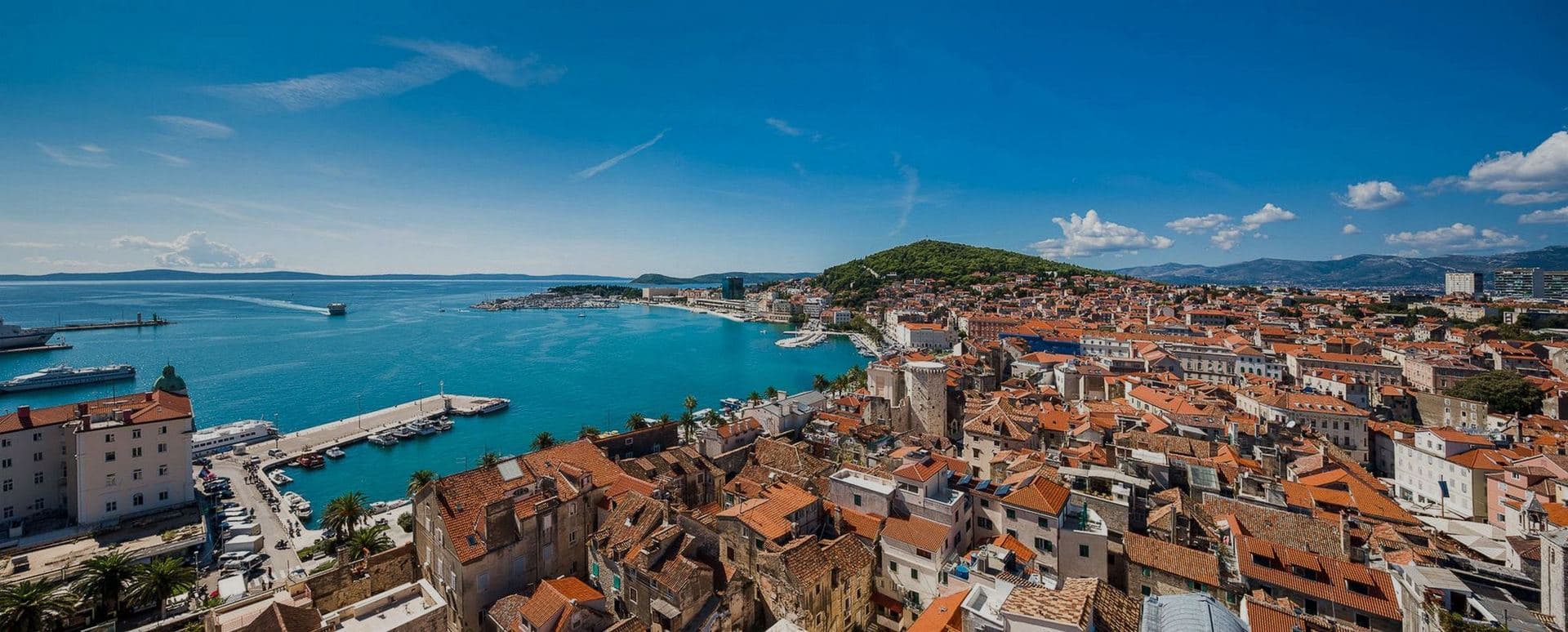
Training ends at 13:00 every day, which leaves the afternoons for Croatia’s second city: a Roman palace still lived in, a wooded hill above the sea, and islands on the horizon.
Getting here
- By air. Split Airport (SPU) is west of the city, near Kaštela, with direct flights from many European cities; there are more in spring and summer than in winter. An airport shuttle bus and taxis run to the city.
- Overland. Long-distance buses connect Split with Zagreb, Ljubljana and other cities, and trains run to Zagreb.
- By sea. Ferries link Split with Ancona in Italy, with more sailings in the warmer months. If you want the Erasmus+ green travel rate, check with your national agency whether your train-and-ferry journey qualifies.
The course takes place at our school, Poljička cesta 26A, Split. City buses and taxis reach it easily from the centre.
A week, as it can be
Mornings are the course; afternoons are yours. Here are some ideas.
- MondayDay 1
09:00–13:00
Training
Afternoon
Diocletian’s Palace
The Roman palace that is the old town, a short bus ride from the school.
- TuesdayDay 2
09:00–13:00
Training
Afternoon
Marjan hill
Pine woods and views over the islands, straight from the old town.
- WednesdayDay 3
09:00–13:00
Training
Afternoon
The Riva
Coffee on the waterfront, or a swim at Bačvice in the warmer months.
- ThursdayDay 4
09:00–13:00
Training
Afternoon
Trogir
A UNESCO-listed island town, about half an hour west of Split.
- FridayDay 5
09:00–13:00
Training
Afternoon
Klis Fortress
A medieval fortress on the pass above the city.
- SaturdayDay 6
09:00–13:00
Training
Afternoon
Your certificate
The last morning ends with certificates; the afternoon is for the trip home.
Where to stay
Accommodation is not part of the course fee; it is usually paid from the individual support in your Erasmus+ grant. Split has hotels, apartments and private rooms for every budget.
- Staying in or near the centre is practical: city buses and taxis reach the school; check the journey to Poljička cesta 26A when you book.
- In July and August, book early: it is the busiest time of the year.
Good to know
- Croatia uses the euro and is in the Schengen area.
- Cards are accepted almost everywhere; keep some cash for small cafés and markets.
- English is widely spoken in Split.
Split through the year
| When | Daytime high | What it is like |
|---|---|---|
| January–February | about 11–12 °C | Quiet, mild, often sunny; the Split locals know. |
| March–April | about 14–18 °C | Spring on the coast; Easter brings the first visitors. |
| May–June | about 23–27 °C | Warm, long days; the sea reaches swimming temperature by June. |
| July–August | about 30 °C | Hot and lively; the busiest and most expensive weeks. |
| September–October | about 21–26 °C | Warm sea, fewer crowds: many teachers’ favourite. |
| November–December | about 13–16 °C | Calm and local; the Christmas season on the Riva. |
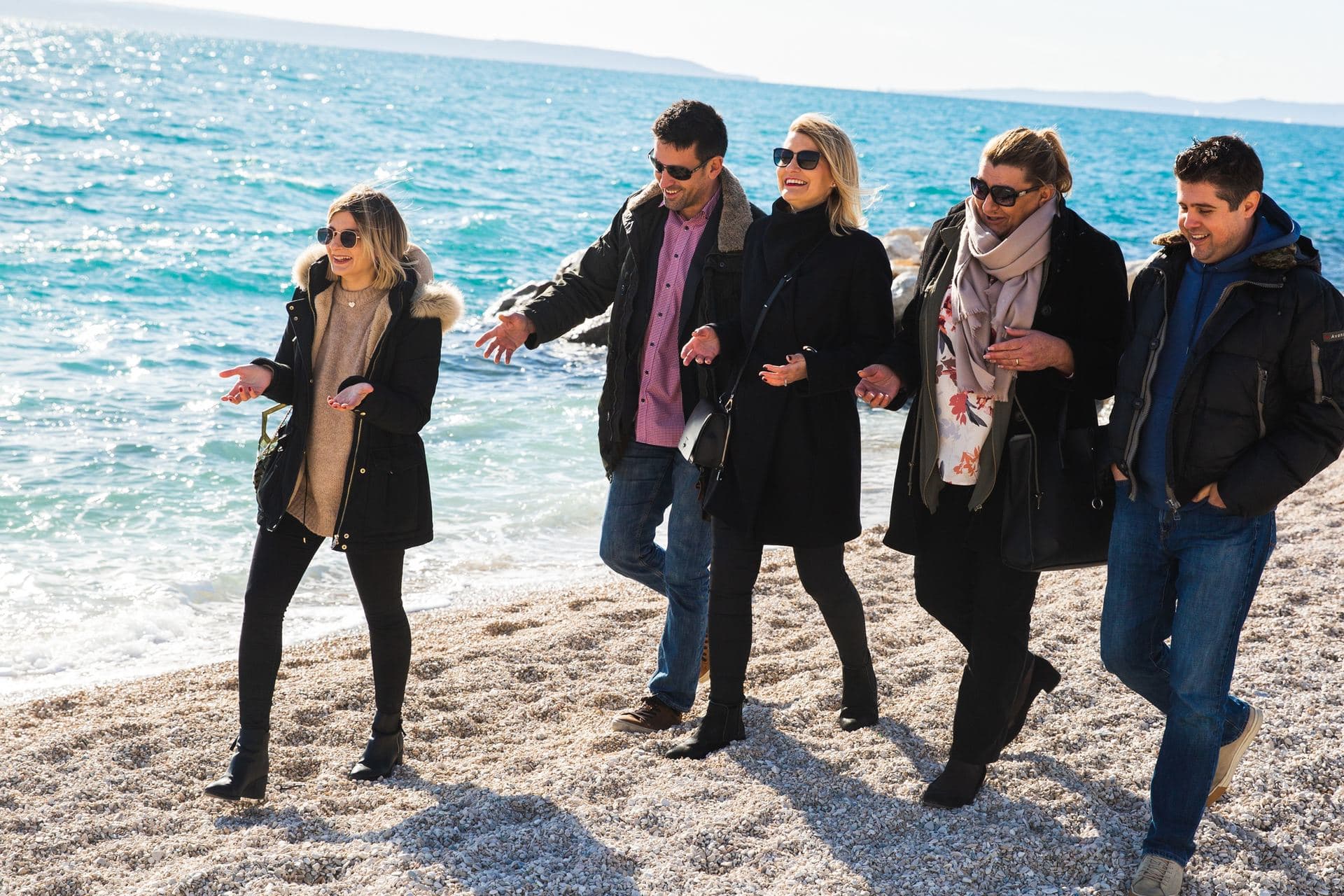
Course participants by the sea in Split.
Questions about travel or where to stay? Write to teacher.training@jantar.hr; we live here. Or choose your course.
Ready to plan your week in Split?
Choose a date and apply, or ask us first. We answer questions from teachers and Erasmus+ coordinators by e-mail at teacher.training@jantar.hr.